
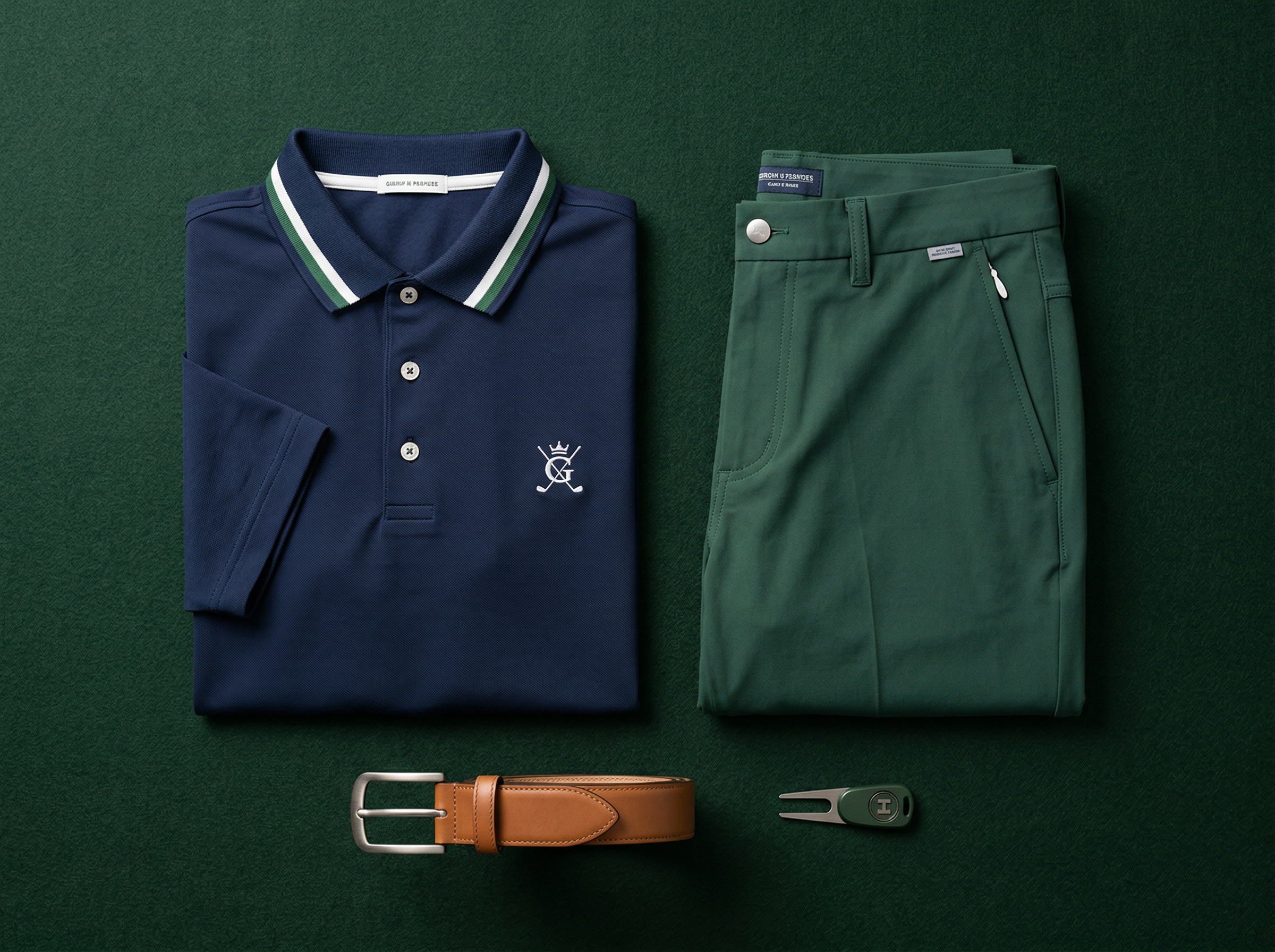
Anyone who has played golf in Southeast Asia over the past decade has noticed something. The courses are extraordinary — oceanside links carved through white sand dunes in Da Nang, jungle layouts threading through ancient temple complexes in Cambodia, mountain courses above Chiang Mai draped in morning mist. But it's not just the courses that have evolved. It's what the golfers are wearing.
Golf fashion in Asia has undergone a transformation that is at once quieter and more radical than anything happening in the Western golf world. And Australian clubs — still largely constrained by a conservative dress-code culture inherited from the British tradition — have much to learn from it.
How Golf Fashion Evolved in Southeast Asia
The story of golf fashion in Southeast Asia is inseparable from the story of golf's explosive growth across the region. In the late 1990s and early 2000s, golf was an aspirational pursuit for Asia's emerging middle class — and aspirational meant conservative. American and European brands set the standard. The navy polo, the khaki trouser, the white visor: the uniform was borrowed wholesale from Augusta and Pebble Beach.
Then something shifted. As golf became embedded in the social fabric of countries like South Korea, Japan, Thailand and Vietnam, a new generation of golfers — younger, more fashion-conscious, more willing to treat the course as a stage for self-expression — began pushing against those conventions. The catalyst in many ways was South Korea, where golf fashion exploded into something genuinely distinctive: bold colour blocking, graphic prints, technical fabrics that looked as good in the clubhouse as they performed on the course.
Brands like J.Lindeberg, Malbon Golf, and the Korean-born labels that populate the racks of Seoul's Mapo district golf boutiques brought a runway sensibility to golf apparel. FootJoy expanded its FJ Flex line. Adidas introduced performance fabrics with fashion-forward silhouettes. And a thriving mid-market of Asian manufacturers began producing custom golf clothing of genuinely premium quality — the same quality that supplies those global brands — at prices that made sophisticated custom programs accessible to clubs and event organisers rather than only to retail giants.
Performance Fabric as the Foundation
Underlying the aesthetic evolution is a revolution in textile technology that Southeast Asia's manufacturing sector has been uniquely positioned to capitalise on. The region that produces much of the world's performance sportswear has access to advanced fabric development that didn't exist fifteen years ago.
Today's performance golf fabrics combine moisture management, four-way stretch, UPF sun protection, anti-odour treatment, and structural recovery — the ability to return to their original shape after repeated washing and wear — in a single lightweight weave. The best of these fabrics are engineered, not simply woven: they're designed from the yarn up for specific end uses, tested under accelerated UV and wash conditions, and validated for colour fastness across hundreds of washes.
This is the fabric standard that premium Asian golf fashion has normalised. And it's the standard that ASEAN Links applies when sourcing for custom golf apparel Australia orders — because there's no reason Australian club members should be wearing inferior fabrics when the manufacturing expertise exists to deliver something significantly better.
Bold Design as a Cultural Statement
The visual language of Asian golf fashion deserves attention beyond the purely technical. Where traditional Western golf apparel has defaulted to safe, conservative palettes — navies, whites, greys, the occasional racing green — Asian golf fashion has embraced colour and pattern as integral to the experience of the game.
The signature of South Korean golf style is confident colour blocking: a polo that pairs a deep teal body with a contrasting coral placket, worn with coordinating shorts in a mid-tone that bridges the two. Vietnamese and Thai golfers have embraced tropical-inspired prints — not kitsch, but sophisticated botanical and geometric patterns that read as premium from fifteen metres away. Japanese golf fashion has developed its own meticulous aesthetic, characterised by precise detailing, tonal variations within a restrained colour story, and an attention to proportion that is distinctly Japanese.
None of this is arbitrary. It reflects a culture that treats golf as an experience to be savoured and a social activity to be dressed for with intention. When you play a round at the stunning Hoiana Shores course in Vietnam or the oceanside Loch Palm in Phuket, the visual beauty of the course demands a certain reciprocal seriousness about presentation. The aesthetic has risen to meet the setting.
What Australian Golf Culture Can Take From This
Australian golf clubs occupy an interesting position. On one hand, Australian golfers are among the most adventurous in the world — they're comfortable with heat, used to exposed coastal links and hard-running inland courses, and increasingly well-travelled in terms of playing golf internationally. On the other hand, many Australian club cultures have inherited a conservatism around dress codes that can translate into apparel choices that undersell the quality of the venues and the sophistication of the membership.
There are signs this is changing. The newer generation of Australian golfers — those who've played in Asia, who follow international golf fashion on Instagram, who wear J.Lindeberg or Malbon on the practice range — are bringing a more open sensibility to what golf club uniforms and club merchandise can look like. Clubs that meet them there, with custom apparel that reflects genuine design intention rather than minimum-viable decoration, will find stronger member engagement with their apparel programs.
Practically, this means several things. It means considering colour more boldly — a coastal club in Queensland might choose a palette inspired by its landscape rather than defaulting to the colours of a British links. It means investing in design — commissioning a proper exploration of the crest and colour story before locking in an order, rather than simply embroidering an existing logo onto a stock polo. And it means specifying performance fabrics as standard, not as an upgrade.
Asian Manufacturing Quality: The Value Proposition
There is a persistent misconception in the Australian market that Asian-made apparel represents a quality compromise. This is demonstrably false, and has been for some time. The factories that produce for J.Lindeberg, FootJoy, Adidas Golf, and the premium Korean and Japanese golf brands are located in Vietnam, Thailand, and across the wider Southeast Asian manufacturing belt. The quality standards they work to are world-class — and those same standards are available for custom orders at a fraction of the retail premium those brands command.
What determines the quality of a custom golf apparel order is not the geography of production but the specification of the order. A well-specified custom order placed with a quality-audited factory — correct fabric weight and weave, appropriate embroidery density and backing for the garment type, a proper pre-production sample process, multi-stage QC — will produce a garment indistinguishable in quality from what you'd find in a premium pro shop.
This is precisely the value proposition that ASEAN Links offers Australian clubs and corporates. Our manufacturing relationships were built through our presence in Southeast Asia — the same region we take golfers to experience some of the world's finest courses. We know these factories personally, we understand the quality standards they're capable of, and we know how to specify an order that captures their best work.
ASEAN Links: The Bridge Between Asian Manufacturing and Australian Golf
The connection between ASEAN Links Golf and the custom golf apparel Australia market isn't coincidental — it's structural. We operate across Southeast Asia, we understand its golf culture and manufacturing landscape, and we're positioned to bring the best of both to Australian clubs and event organisers.
When an Australian golf club works with us on custom golf polo shirts, they're not simply placing an order with an apparel supplier. They're accessing a decade of regional expertise — knowledge of which factories produce the best performance knit fabrics, understanding of which embroidery workshops have the finest detail capability for a complex crest, familiarity with the logistics of quality inspection and freight that delivers orders reliably and on time.
They're also accessing a design sensibility informed by the best of Asian golf fashion — bold enough to make their apparel memorable, refined enough to meet the standards of a premium Australian club. The goal is never novelty for its own sake. It's apparel that serves the club's identity, performs on the course, and earns its place in members' wardrobes for years.
Golf fashion is no longer purely a Western conversation. The most interesting design thinking, the most advanced fabric engineering, and some of the most compelling golf apparel being produced today is coming from Asia. Australian clubs that engage with that reality — working with suppliers who understand both worlds — will find they can offer their members something genuinely exceptional. And exceptional is exactly what the game deserves.