
Something is shifting in Australian golf travel. The golfers who once saved up for a pilgrimage to St Andrews, banked their leave for a week at Barnbougle or New South Wales Golf Club, or organised groups to Kauri Cliffs in New Zealand are increasingly turning their attention — and their travel budgets — toward Southeast Asia. The numbers tell the story: Australian arrivals to Vietnam's Da Nang for golf-centric travel have grown every year since 2015, and the trajectory in Thailand and Cambodia is similar. This isn't a fad or a budget compromise. It's a fundamental reassessment of what a world-class golf holiday looks like — and Asia is passing every test.
The Value Proposition: Extraordinary Golf at a Fraction of Australian Prices
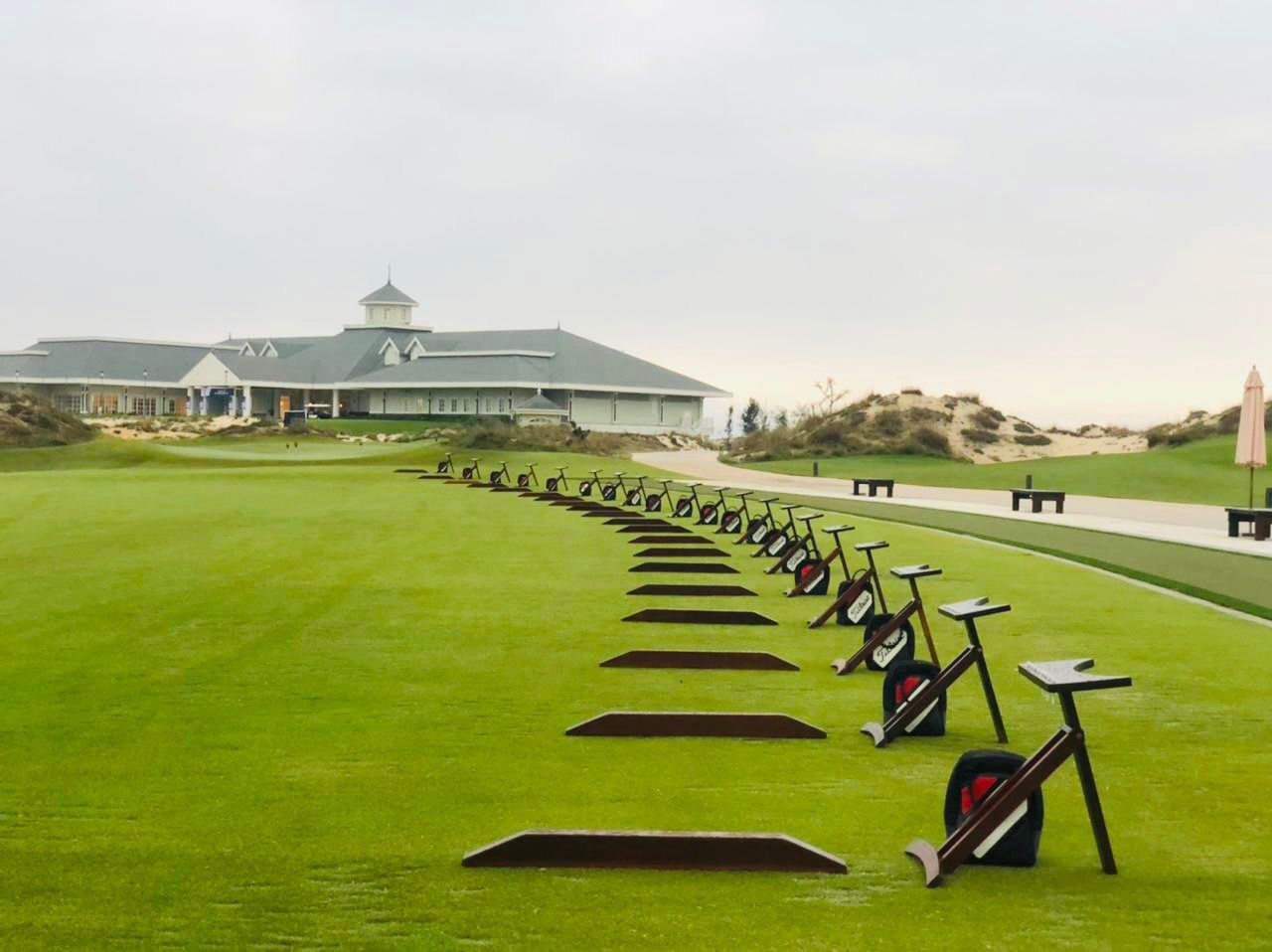
Let's start with the most obvious factor, because it genuinely is as good as you've heard. A round at Hoiana Shores Golf Club in Da Nang — designed by Robert Trent Jones Jr. on spectacular coastal dunes, comparable in ambition and execution to anything in Ireland or Scotland — costs approximately USD $120–$150 including a caddie. The equivalent calibre of golf experience in Australia doesn't exist at any price; the closest domestic comparisons (Royal Melbourne, Kingston Heath, New South Wales Golf Club) charge AUD $300–$500+ per round, don't include caddies, and require membership reciprocal access or an extended waiting list.
Spread across a week-long trip with five rounds, an Australian golfer in Da Nang spends approximately USD $600–$900 on golf — roughly what a single premium round at Augusta National's equivalent in Australia might cost, if such a thing existed. For groups travelling together, the savings compound: five rounds for four players in Da Nang represents a green-fee budget that would barely cover two rounds for the same group at comparable quality back home.
World-Class Course Design by Golf's Greatest Architects
The value proposition would be less compelling if it simply meant accepting lower-quality golf. But Southeast Asia's course portfolio — built largely over the past 20 years with significant investment from resort developers and local governments keen to attract international tourism — reads like a who's who of golf architecture's elite:
- Greg Norman designed BRG Danang Golf Resort and Danang Golf Club in Da Nang — two of Vietnam's finest layouts — as well as courses across Thailand and the broader region.
- Nick Faldo designed Laguna Lang Co near Da Nang, Angkor Golf Resort in Siem Reap, and Vietnam Golf & Country Club in Ho Chi Minh City, bringing his signature precision-over-power philosophy to tropical terrain.
- Robert Trent Jones Jr. created Hoiana Shores, widely regarded as one of Asia's most spectacular coastal layouts.
- Colin Montgomerie left his imprint on the Da Nang region with Montgomerie Links — a duneland course that rewards the same tactical intelligence as his European designs.
- Luke Donald designed Ba Na Hills Golf Club — an extraordinary altitude course in the mountains behind Da Nang.
- Brian Curley (Schmidt-Curley Design) — the firm behind Vattanac Golf Resort in Siem Reap and Black Mountain in Hua Hin — has produced some of the region's most acclaimed layouts.
The depth of designer pedigree in Southeast Asia rivals any golf region on earth. The fact that access to these courses costs a fraction of comparable designer work in Europe or the United States is a market inefficiency that savvy Australian golfers have been quietly exploiting for years.
The Caddie Advantage
For most Australian golfers, the included caddie is a revelation. Southeast Asia's golf culture has maintained the caddie tradition — at virtually every course from Phuket to Da Nang to Siem Reap, a local caddie accompanies you for all 18 holes, carries your bag, provides line and distance guidance, reads greens, and rakes bunkers. The fee (typically USD $15–$25) is included in or added to the green fee, and a tip of similar value at the end of the round is the custom.
Experienced Southeast Asian caddies — particularly those at premium courses like Hoiana Shores, Blue Canyon, or Black Mountain — have an intimate knowledge of their course that translates directly into better scores and a more enjoyable round. They'll tell you that the 14th green has a disguised shelf that turns right-to-left putts into three-putts. They'll remind you that the prevailing wind shifts on the back nine. They'll confirm your distance to the flag and add "but play two clubs more — the green is elevated." That accumulated wisdom, delivered in quiet broken English or via confident hand gestures, is worth multiple shots over 18 holes for any visitor.
Tropical Weather: Playing Golf in Sunshine
The weather advantage of Southeast Asia over traditional Anglophone golf destinations — Scotland, Ireland, England, New Zealand in winter — is self-evident, but even comparing to Australia's domestic options, the numbers are compelling. Playing golf in Da Nang in February means 26°C, clear skies, and a gentle sea breeze across the dunes. Playing at a premium Victorian course in July might mean 12°C, 40 km/h winds, and the realistic prospect of rain on seven of the holes. Neither experience is invalid — links golf in cold conditions has its own severe beauty — but for golfers who primarily want to play their best game in comfortable conditions, tropical Asia wins decisively.
The warmth also extends the playing day in useful ways. Early morning tee times (from 6:30 am) allow a full 18-hole round to be completed before the heat peaks, leaving the afternoon free for cultural exploration, beach time, or — for the particularly keen — a twilight nine.
The Cultural Counterpoint
Experienced golf travellers know that the best golf trips are built around more than just the courses. The meals before and after the round; the city you're staying in; the experiences available on your non-golf days; the sense of genuine discovery when you're somewhere new — these elements matter as much as the handicap differential between courses. Southeast Asia delivers all of them in abundance.
Playing golf in Da Nang means spending evenings in Hoi An Ancient Town — one of the most beautiful places in Southeast Asia, a UNESCO World Heritage Site of yellow-walled shophouses and lantern-lit streets. Playing in Phuket means access to the Andaman Sea's extraordinary marine landscape — Phang Nga Bay, Phi Phi Islands, the limestone karsts that defined the Bond film backdrop. Playing in Siem Reap means Angkor Wat at sunrise: an experience that alters your sense of human achievement and the passage of time in ways that persist long after the round is forgotten.
This cultural richness transforms a golf trip into something more substantial — a genuine travel experience rather than simply a relocation of your weekend round to somewhere warmer. It's why Australian golfers who visit once tend to return, and why the golf-and-culture combination is increasingly displacing the pure golf destination as the preferred format for serious golf travel.
The Trend: Why It's Growing
Several structural factors are accelerating the shift toward Southeast Asia for Australian golf travellers:
- Improved air access: Vietnam Airlines now operates regular services from Sydney and Melbourne. Qantas and Singapore Airlines both offer excellent connections to Da Nang and Phuket with transfer times well under the old eight-hour benchmark. The region feels more accessible than it did even five years ago.
- Word of mouth: The first generation of Australian golfers who visited Da Nang or Phuket came back and told their clubs, their fourballs, their corporate golf groups. This organic recommendation network has been the primary driver of growth — golfers trust other golfers on destination quality.
- Domestic price inflation: Green fees at premium Australian courses have risen significantly. As the cost gap between a domestic bucket-list round and a full week in Vietnam has narrowed, the value case for Asia has strengthened.
- Specialist operators: The emergence of dedicated Australia-to-Asia golf tour operators — like ASEAN Links Golf — has removed the logistical barriers that once made DIY planning daunting. With a trusted operator handling everything, the complexity of an overseas golf trip disappears.
Is Asia Right for You?
The honest answer is: if you play golf and you haven't been, you're missing something exceptional. Southeast Asia's golf scene has matured to the point where it competes with the world's best destinations on every metric that matters — course quality, conditioning, facilities, service, and value. The cultural richness that surrounds the golf is a bonus that no other major golf region can match.
At ASEAN Links Golf, we've built our entire business around this conviction. We're Australian golfers who discovered Southeast Asia's courses, fell in love with the experience, and decided to make it easier for every Australian golfer to do the same. Our tours aren't generic packages — they're itineraries built by people who've played every course on the schedule and stayed in every hotel on the list. Golf. Explore. Asia.